What Are Pharmaceutical Intermediates and How Are They Used?
Pharmaceutical Intermediates are the carefully controlled compounds made between starting materials and an active pharmaceutical ingredient (API). They are not usually the final medicine. Instead, they support the chemical pathway that creates it. A single intermediate may influence purity, yield, stability, and manufacturing consistency.
The term sounds simple. It is not.
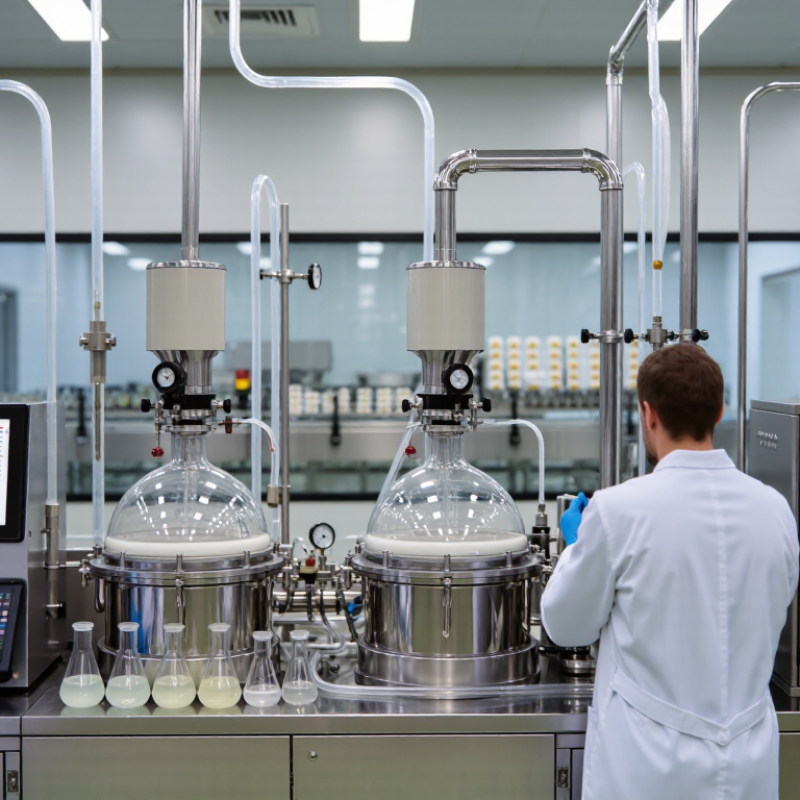
In a modern facility, technicians may monitor temperature, reaction time, solvent quality, and agitation during each stage. They also examine impurity profiles, moisture levels, particle characteristics, and batch records. These details matter because a small variation in an intermediate can affect the final API. The material may be used in tablets, capsules, injections, or other regulated dosage forms.
Dr. Janet Woodcock, former director of the FDA’s Center for Drug Evaluation and Research, emphasized, “Quality cannot be tested into products; it should be built in.” This principle applies directly to Pharmaceutical Intermediates. Testing remains essential, but it cannot repair poor process design, weak supplier controls, or incomplete documentation.
Reliable production therefore combines chemistry, engineering, analytical science, and regulatory discipline. Manufacturers must identify critical process parameters and control potential impurities before they reach later stages. Good Manufacturing Practice expectations also require traceability from raw materials to released batches.
Yet not every intermediate deserves the same control strategy. Risk depends on its chemical behavior, process position, and potential impact on the API. That distinction is often overlooked. This article explores what Pharmaceutical Intermediates are, how manufacturers produce and evaluate them, and why their quality can shape the safety and reliability of finished medicines.
Definition and Role of Pharmaceutical Intermediates
Pharmaceutical intermediates are chemical compounds formed during the synthesis of an active pharmaceutical ingredient (API). They sit between starting materials and the final medicine component. An intermediate may be isolated, purified, tested, and stored before the next reaction. In other processes, it is used immediately without isolation. Its identity still matters.
Their role is both practical and scientific. Chemists use intermediates to build molecular structure step by step, while quality teams monitor purity, moisture, residual solvents, and related impurities. A well-defined intermediate can make production more consistent and easier to scale. It also helps manufacturers investigate unexpected results, such as a color change or a lower reaction yield. However, an intermediate is not automatically safe or suitable for medical use. It requires appropriate handling, documented specifications, and validated analytical methods.
Tips: Check the intermediate’s structure, purity limits, storage conditions, and analytical records before approving the next step. Keep clear batch history. Small data gaps can become large problems later.
In my experience, the most overlooked issue is not always chemical performance. It can be labeling, sampling, or incomplete temperature records. These details seem minor. They are not. Reliable intermediate control depends on trained personnel, suitable equipment, and procedures aligned with applicable quality standards. Some routes may also need redesign because a stable laboratory intermediate behaves poorly during commercial-scale processing.
Major Types and Structural Features of Intermediates
Pharmaceutical intermediates are chemically defined stages between raw materials and an active pharmaceutical ingredient. Their structures determine how efficiently a synthesis proceeds. Grand View Research estimated the global pharmaceutical intermediates market at about USD 39 billion in 2023, with continued growth through 2030. That expansion reflects rising demand for complex medicines and tighter manufacturing controls.
Major types include building blocks, advanced intermediates, chiral intermediates, heterocyclic compounds, and peptide-related fragments. Building blocks often contain reactive groups, such as amines, alcohols, acids, or halides. Advanced intermediates are closer to the final active ingredient and usually require stronger impurity control. Heterocycles add nitrogen, oxygen, or sulfur atoms within ring systems. These rings can influence solubility, stability, and biological activity. Chiral intermediates contain defined three-dimensional arrangements, which may affect a medicine’s safety and performance.
Small details matter greatly. A single stereocenter can change pharmacological behavior. Protecting groups can also simplify a reaction, but they create extra processing steps. Manufacturing teams therefore examine purity, particle form, residual solvents, and reaction reproducibility. The International Council for Harmonisation’s Q7 guidance remains a key reference for active ingredient manufacturing controls. Categories are useful, but imperfect. Some intermediates fit several groups at once. In practice, chemists classify them by structure, process stage, and quality risk.
Pharmaceutical Intermediates: Representative Molecular Mass by Structural Class
Pharmaceutical intermediates are chemically defined building blocks used during active pharmaceutical ingredient synthesis. Their structures commonly contain aromatic rings, amines, carboxylic acids, heterocycles, carbonyl groups, or highly functionalized ring systems.
The chart compares representative intermediates by molar mass. The values are calculated from the molecular formulas of the selected compounds and are not market-share or company-performance data. Structural features influence reactivity, solubility, selectivity, and the number of synthetic steps required.
Uses in Drug Discovery and Commercial Manufacturing
What Are Pharmaceutical Intermediates and How Are They Used?
Uses in Drug Discovery and Commercial Manufacturing
Pharmaceutical intermediates are chemically defined compounds made between starting materials and an active pharmaceutical ingredient. In drug discovery, they help scientists build and compare potential medicines. Researchers may alter one functional group, then measure changes in potency, selectivity, solubility, or stability. Small changes matter. A carefully designed intermediate can reveal why one molecule performs better than another.
These compounds also support route scouting. Chemists test reaction conditions, purification methods, and analytical controls before selecting a viable process. High-performance liquid chromatography, mass spectrometry, and nuclear magnetic resonance help confirm identity and purity. Experience shows that a fast laboratory reaction is not always a practical manufacturing route. Scale changes everything. Heat transfer, mixing, solvent recovery, and waste generation can behave differently in larger equipment.
During commercial manufacturing, intermediates must meet controlled specifications and consistent impurity limits. Production teams evaluate crystallization, drying, storage stability, and transport conditions. They also document batches under good manufacturing practice systems, with validated methods and traceable records. An intermediate may be chemically correct yet unsuitable for production if it is difficult to filter or sensitive to humidity. This is an often-overlooked issue. Process development therefore connects medicinal chemistry with engineering, quality assurance, and regulatory expectations. Careful risk assessment remains necessary because unexpected impurities can appear after a seemingly minor process change.