What is a Double-Ended Dowel Pin and Its Uses?
The Double-Ended Dowel Pin is a versatile fastening tool in modern engineering and manufacturing. This pin features a cylindrical design with a uniform diameter at both ends. Its dual-ended structure allows for secure alignment and connection between two components. Many industries utilize this tool for constructing furniture, automotive applications, and machinery assembly.
However, despite its broad use, there are nuances in choosing the right size and material for specific applications. Selecting an improper pin can lead to structural weaknesses. For instance, using a too-short pin might result in insufficient hold, while an overly long pin can complicate assembly. These considerations highlight the importance of expertise in selecting double-ended dowel pins.
Understanding the functionality and limitations of the Double-Ended Dowel Pin is vital. It’s more than just a simple fastener; it’s a crucial element that influences the integrity of assemblies. Thus, it is important to approach its application with a combination of knowledge and precision.
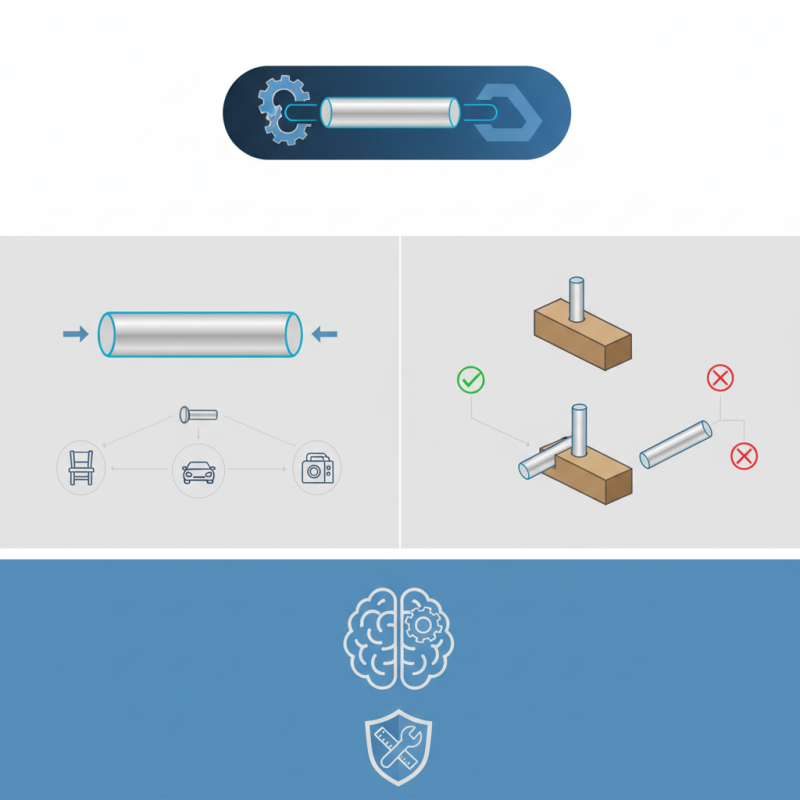
What is a Double-Ended Dowel Pin?
A double-ended dowel pin is a cylindrical fastener with a pin shape at both ends. It is commonly used to align two components or parts accurately. This pin is essential in woodworking, metalworking, and manufacturing applications. The advantages include ease of insertion and removal, making it user-friendly for various projects.
Precision is critical when using double-ended dowel pins. Proper alignment ensures a secure fit between parts. However, challenges can arise during installation, such as misalignment or incorrect drilling distances. These errors can compromise the integrity of the assembly. Users should carefully measure and plan their projects to avoid these pitfalls.
In some cases, users may overlook the need for accurate hole sizes. A dowel pin may fit loosely if the hole is too large. Conversely, if it’s too tight, installation becomes difficult. Experimentation and practice are often necessary to get it right. A reliable understanding of the dowel pin’s role can lead to successful outcomes in various applications.
Design and Construction of Double-Ended Dowel Pins
Double-ended dowel pins are critical components in various assembly processes. They feature a cylindrical shape with a pin at both ends. This design allows them to join two parts securely. The construction involves precise machining to ensure a tight fit. Typically made from stainless steel or hardened materials, they can withstand significant loads. Their surface finish often includes a slight texture, which aids in grip and alignment during insertion.
In terms of design, double-ended dowel pins are simple yet effective. They come in various sizes and lengths to accommodate different applications. Typically, the ends are chamfered to facilitate easy insertion. This thoughtful design minimizes the risk of damage during assembly. However, users may face challenges with alignment precision. If not aligned correctly, the joint may not achieve optimal strength. Continuous feedback and testing from users can lead to improvements in design and functionality. In the end, the quality of materials used plays a crucial role in the durability of dowel pins.
Common Materials Used for Double-Ended Dowel Pins
Double-ended dowel pins are versatile fasteners used to align and join two components. The materials used for these pins significantly impact their strength and performance. Common materials include stainless steel, carbon steel, and plastics. Each material offers unique properties suitable for different applications.
Stainless steel dowel pins exhibit excellent corrosion resistance. They are ideal for outdoor or humid environments. Conversely, carbon steel pins are known for their strength and durability but require a protective coating to resist rust. Plastic dowel pins are lightweight and non-marring, making them perfect for sensitive applications. However, they may not withstand high loads.
Material choice reflects the specific needs of a project. Using the wrong pin material can lead to failure. For instance, choosing plastic in a heavy-load scenario can result in breakage. Professionals often weigh factors like load, environment, and intended lifespan when selecting dowel pins. Assessing these aspects ensures the right fit and optimal performance.
What is a Double-Ended Dowel Pin and Its Uses? - Common Materials Used for Double-Ended Dowel Pins
| Material | Description | Typical Uses | Advantages |
| Steel | A strong and durable material often used in high-stress applications. | Construction, automotive assemblies, and heavy machinery. | High tensile strength and resistance to deformation. |
| Stainless Steel | Corrosion-resistant, ideal for environments exposed to moisture. | Food processing, medical devices, and marine applications. | Durability and resistance to rust and staining. |
| Brass | An alloy of copper and zinc, known for its machinability. | Decorative applications, musical instruments, and precision fittings. | Aesthetically pleasing and provides good electrical conductivity. |
| Plastic | Lightweight and can be molded into various shapes. | Light-duty applications and prototyping. | Corrosion-resistant and versatile for different projects. |
Applications of Double-Ended Dowel Pins in Various Industries
Double-ended dowel pins are versatile fasteners, often used in various industries for alignment and connection. These cylindrical pins possess a uniform diameter and are pointed on both ends, providing precise placement in drilled holes. Their design makes them ideal for securing furniture joints, machinery components, and even automotive parts.
In the woodworking industry, double-ended dowel pins ensure strong joint connections. Carpenters often use them to align panels and frames, enhancing the structural integrity of furniture. In automotive manufacturing, these pins are critical in assembling engine components. They provide accurate alignment during the production process, ensuring parts fit perfectly without gaps.
Tips: When using dowel pins, ensure hole diameters match the pin size. This prevents loose fittings and enhances strength. For optimal results, consider the thickness of the materials you are joining.
In the field of electronics, double-ended dowel pins also play an essential role. They help align circuit boards during assembly. This allows for consistent and reliable connections across components. Nonetheless, care must be taken; misalignment can lead to performance issues in electronic devices. Always double-check placements before final assembly.
Advantages of Using Double-Ended Dowel Pins in Assembly Processes
Double-ended dowel pins offer several advantages in assembly processes. These pins feature a cylindrical shape with threads on both ends. This design allows them to accommodate a tight fit between two components. Such functionality is critical in woodworking and metalworking. Assembly lines benefit greatly from the precision these pins provide. They ensure accurate alignment, which enhances overall product quality.
Using double-ended dowel pins can improve efficiency in production. Their ability to facilitate quick assembly reduces the time needed for each task. Teams can assemble multiple pieces without constant adjustments. This can lead to fewer errors. However, it’s essential to check for proper sizing. An incorrect size may cause misalignment or even part damage.
Another advantage is their versatility. These pins can be used in various applications, from furniture making to machinery. Their standardized sizes make them easy to source. They help create a robust connection that withstands stress. Still, relying solely on these pins may not always be ideal. Understanding when and where to use them requires experience. Balancing their usage with other joining methods can yield better results.