
Skip to content
Menu

China Top 10 Electrode Calendering Process Manufacturers?

China’s battery industry has become a major force in global cell manufacturing. The International Energy Agency’s Global EV Outlook 2024 reported that China produced nearly 80% of global battery cells in 2023. Battery demand also reached about 750 GWh worldwide. That growth increases pressure on electrode quality, production speed, and equipment reliability.

This is where the Electrode Calendering Process becomes decisive. Calendering compresses coated electrode sheets between controlled rollers. It adjusts thickness, density, porosity, and surface consistency. A small deviation can affect energy density or cause coating defects. Picture a copper or aluminum foil moving continuously through heated steel rollers. Tension control, roller parallelism, temperature stability, and dust management all matter.

This article introduces China’s top 10 Electrode Calendering Process manufacturers for battery production. The selection should consider more than catalogue specifications. Practical evidence matters, including factory references, delivered line capacity, engineering support, spare-part response, and verified testing data. Relevant standards and quality systems also deserve attention. Reports from the IEA and BloombergNEF show strong battery manufacturing expansion, but market rankings remain difficult to standardize. Some companies disclose detailed performance data. Others provide limited public information. That is an important weakness.

Therefore, this overview uses a practical comparison framework rather than claiming an absolute ranking. It focuses on equipment capability, application experience, process control, and customer credibility. Readers should still confirm roller accuracy, maximum web width, compaction range, production speed, and after-sales coverage before purchasing. A polished brochure is not enough. Real production results are.
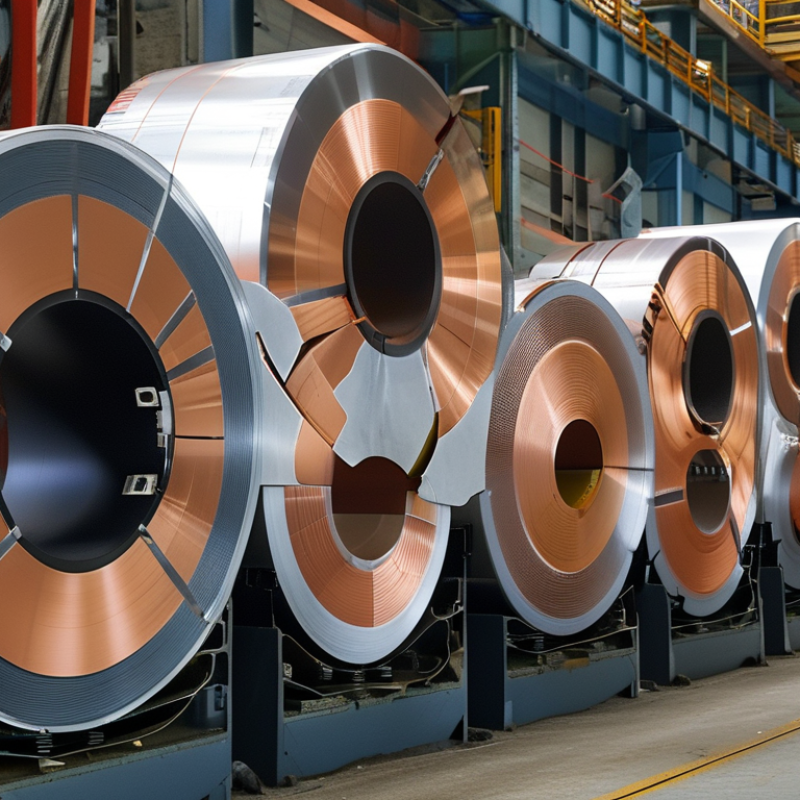
China Top 10 Electrode Calendering Process Manufacturers?

How Electrode Calendering Controls 25–40% Porosity in Lithium-Ion Cells

How Electrode Calendering Controls 25–40% Porosity in Lithium-Ion Cells

Electrode calendering compresses coated foil between controlled rollers. It reduces void space and improves particle contact. Typical lithium-ion electrodes target about 25–40% porosity, depending on chemistry and loading. Lower porosity can shorten ion pathways and increase volumetric energy density. However, excessive compression restricts electrolyte movement and raises cell resistance. The U.S. Department of Energy’s Battery Manufacturing R&D Roadmap identifies density, uniformity, and defect control as essential manufacturing priorities. A 2018 Journal of Power Sources study also linked calendering pressure with changes in porosity, tortuosity, and power performance.

In factory trials, roller pressure alone rarely solves the problem. Line speed, roll temperature, coating thickness, and moisture must remain stable. A small thickness variation can create local current-density differences during cycling. That detail is easy to miss. For manufacturers evaluating electrode calendering equipment, measurable control matters more than headline throughput. Useful evidence includes thickness mapping, porosity testing, compressive-force records, and repeatability data across full-width electrodes. The International Energy Agency reported continued growth in global battery manufacturing capacity in its Global EV Outlook 2024, increasing pressure for reliable, scalable process control.

Tips: Set porosity targets by cell design, not habit. Measure before and after calendering. Check both electrodes separately. Do not assume higher density means better performance. Pilot results may change after aging tests. That uncertainty deserves attention.

How Electrode Calendering Controls 25–40% Porosity in Lithium-Ion Cells

Calendering compresses the coated electrode to reduce excessive void volume and achieve a controlled porosity window. The representative target ranges below are commonly used engineering ranges for calendered lithium-ion electrodes; actual values depend on active material, binder system, coating density, and cell design. Porosity is calculated as: 1 − electrode bulk density ÷ theoretical solid-material density.

How to Rank China’s Top 10 Manufacturers by ±1 μm Gap Control

Ranking China’s top ten electrode calendering process manufacturers should begin with measurable gap control, not production volume. The key test is whether each line holds the target gap within ±1 μm across the working width. This requires calibrated laser sensors, stable roll geometry, and documented repeatability. A single factory trial proves little. Real evidence comes from repeated runs using different electrode widths, coating weights, and line speeds. Measure the drift.

I would score manufacturers across six areas: static accuracy, dynamic accuracy, cross-width uniformity, pressure stability, thermal compensation, and service response. Static accuracy checks the stopped rolls. Dynamic accuracy checks behavior during acceleration and continuous feeding. Inspectors should record readings at the center and both edges, then repeat them after thermal saturation. A credible supplier provides raw datasets, calibration dates, tolerance definitions, and corrective-action records. ±1 μm sounds impressive. However, measurement uncertainty matters. If instrument uncertainty reaches 0.8 μm, the claim needs caution.

The ranking should also include operator training, spare-part traceability, software alarms, and maintenance intervals. During site visits, reviewers can inspect roll runout, hydraulic response, and foil wrinkles near the exit. These details reveal practical control better than polished brochures. I would assign weighted scores, publish test conditions, and separate verified results from supplier claims. My judgment would remain provisional when long-term data is missing. One weak point remains. Public information rarely shows performance after months of production.

Key Calendering Metrics: Roll Width, Line Speed, Pressure, and Density

For a China top-10 electrode calendering manufacturer, four metrics reveal practical capability: roll width, line speed, pressure, and finished density.

Width comes first. Commercial systems often support roughly 500–1,200 mm rolls, while pilot equipment may remain below 300 mm. Wider rolls improve throughput but amplify edge cracking, thickness variation, and alignment errors.

Line speed usually ranges from 20 to 80 meters per minute, depending on coating chemistry, foil width, and drying quality.

Pressure is not simply “higher is better.” Many electrode lines operate near 50–200 kN/m, but the correct setting depends on porosity, binder distribution, and particle strength. Pressure is unforgiving. Excessive loading can damage active particles and reduce electrolyte access. Insufficient loading leaves unstable density gradients.

Calendering must target density, not only production speed.

Cathode and anode targets vary widely, but industrial development commonly evaluates density alongside porosity, adhesion, and electrical resistance.

The International Energy Agency’s Global EV Outlook 2024 reported over 750 GWh of global electric-vehicle battery demand in 2023. The U.S. National Blueprint for Lithium Batteries 2021–2030 also emphasizes scalable, consistent domestic manufacturing. These reports explain why repeatability now matters as much as nominal output.

In field audits, a supplier may advertise 1,000 mm width and 60 m/min speed, yet provide limited evidence for cross-web uniformity. That gap deserves scrutiny. Real qualification should examine roll temperature, pressure stability, density mapping, and electrode performance after cycling.

How the Top 10 Compare on Cathode and Anode Process Compatibility

Comparing the top ten electrode calendering process manufacturers requires more than checking machine width or maximum pressure. Cathode and anode materials respond differently. High-nickel cathodes often need controlled compression and stable temperature management. Graphite anodes require uniform density without closing pores excessively. Silicon-rich anodes are more difficult because they can rebound after calendering. That distinction matters.

The International Energy Agency reported that global electric-vehicle battery demand exceeded 750 GWh in 2023. It also identified manufacturing yield, energy density, and material efficiency as major competitiveness factors.

Against this background, the strongest manufacturers usually offer adjustable roll gaps, independent pressure control, heated rolls, and inline thickness measurement.

Cathode compatibility depends on handling high coating loads and fragile active layers. Anode compatibility depends more heavily on springback control, porosity retention, and surface uniformity.

No ranking is fully fair. Public specifications rarely reveal long-term yield data. Some suppliers perform well with laboratory cells but struggle during continuous production. Others provide reliable mechanical platforms but limited process analytics.

Reports from the U.S. Department of Energy emphasize that calendering directly influences electrode porosity, adhesion, and electrochemical consistency.

Practical testing should therefore compare both chemistries, not one sample material. A useful trial measures thickness variation across the roll, density after aging, particle damage, and capacity retention. Small differences become expensive at gigawatt-hour scale.

Quality, Safety, and ISO 9001 Compliance for Calendering Equipment Suppliers

Selecting one of China’s top ten electrode calendering process manufacturers requires more than comparing prices. Quality begins with stable roller parallelism, accurate gap control, and even temperature across the working width. In pilot-line audits, engineers should inspect sample electrodes, surface uniformity, and thickness variation. Small deviations can affect battery performance.

Safety deserves equal attention. Check guarding around rotating rollers, emergency-stop response, thermal protection, and safe material loading procedures. A reliable supplier should provide risk assessments, operator training, maintenance schedules, and clear technical manuals. ISO 9001 compliance adds structure through documented procedures, inspection records, corrective actions, and traceable component control. Yet a certificate alone proves little. The factory’s daily discipline matters more.

Tips: Request recent calibration records and factory acceptance test results. Ask how rejected parts are handled. Confirm whether software changes are recorded and approved. Visit the production site if possible. Talk with operators, not only sales staff. No supplier is flawless. Even experienced teams may overlook a sensor drift or delayed spare-part response. This is where careful questions reveal real reliability. A strong supplier welcomes testing, explains limitations, and supports transparent improvement after delivery.

China Top 10 Electrode Calendering Process Manufacturers — Quality, Safety, and ISO 9001 Compliance Screening Table
Rank Anonymized Supplier Profile Primary Equipment Scope Typical Electrode Materials Representative Calendering Configuration Thickness-Control Capability Quality-Control Evidence to Request Safety Functions Expected ISO 9001:2015 Verification Buyer-Side Assessment
01 Manufacturer 01
Industrial electrode-roll press supplier
Continuous calendering systems for lithium-ion electrode production Graphite, silicon-graphite, NMC, LFP, lithium-cobalt oxide Dual-roll steel calender; heated or temperature-controlled rolls; automatic gap adjustment Closed-loop control using roll gap, pressure, load-cell, and thickness feedback Material certificates, roll runout report, thickness repeatability data, FAT protocol Emergency stops, interlocked guarding, overload protection, nip-point protection Certificate and scope required Suitable for buyers requiring process automation and documented factory acceptance testing
02 Manufacturer 02
Pilot-line and laboratory equipment supplier
Compact pilot calenders and R&D electrode densification equipment Laboratory cathode and anode coatings; water-based and solvent-based formulations Small-format two-roll design with manual or servo-driven gap control Digital gap display with operator-set pressure and thickness monitoring Calibration certificates, test-run records, spare-parts list, operator manual Guarded nip area, safety relay, emergency stop, thermal cut-off where heated rolls are used Verify legal entity and certificate validity Appropriate for process development, scale-up trials, and university or laboratory use
03 Manufacturer 03
High-load precision calendering equipment supplier
High-pressure calenders for high-density electrode production LFP, NMC, high-loading graphite, silicon-containing anodes Rigid roll frame, hydraulic or electromechanical loading, force monitoring, automatic leveling Pressure and gap feedback with transverse alignment adjustment Load-cell calibration, roll parallelism data, surface-finish report, process capability study Hydraulic pressure relief, overload trip, guarding, two-hand or monitored start controls Certificate scope must cover manufacturing activities Best suited to applications where compaction density and cross-web uniformity are critical
04 Manufacturer 04
Roll-to-roll battery machinery integrator
Calendering modules integrated with unwinding, web guiding, inspection, and rewinding Coated copper and aluminum current collectors for lithium-ion cells Modular roll-to-roll line with tension control and synchronized drive system In-line thickness monitoring and web-tension feedback, subject to final configuration Line-layout drawing, electrical schematics, PLC backup, FAT/SAT documentation Full-line emergency circuit, access-door interlocks, web-break detection, anti-entanglement protection Verify certificate holder matches contracting entity Strong option for customers seeking a complete production line rather than a standalone press
05 Manufacturer 05
Custom-engineered battery process machinery supplier
Customized calendering units designed around customer electrode width and production rate Graphite, LFP, NMC, LCO, sodium-ion electrode materials Application-specific roll width, roll diameter, heating, cooling, and loading system Configuration-dependent; requires validation with customer coating and target density Design risk assessment, material traceability, dimensional inspection, commissioning report Risk assessment, guarding, emergency stop circuit, thermal and pressure protection Request current certificate, scope, and issuing-body details Useful for non-standard widths, special temperatures, or customized process integration
06 Manufacturer 06
Mid-scale production calender supplier
Production calenders for small and medium battery manufacturing facilities Standard lithium-ion cathode and anode coatings Two-roll production machine with servo drive, adjustable pressure, and digital HMI Recipe-based parameter storage with manual sampling and optional in-line measurement Incoming inspection procedure, final inspection checklist, electrical safety test results Emergency stop, guarding, motor overload protection, alarm history, safe restart logic Verify certificate date and applicable manufacturing scope Practical choice for cost-sensitive projects that still require basic automation
07 Manufacturer 07
Precision thin-electrode calendering supplier
Fine-gap calendering equipment for thin coated electrodes and specialty cells Thin graphite anodes, high-nickel cathodes, specialty research coatings Precision-machined rolls with fine adjustment, vibration control, and temperature monitoring Fine gap adjustment; actual performance must be confirmed using the buyer's material and test method Roll concentricity, surface roughness, vibration test, thickness mapping, sample approval Nip guarding, vibration alarm, emergency stop, controlled acceleration and deceleration Do not accept an unverified ISO claim Recommended only after material trials demonstrate required thickness and density uniformity
08 Manufacturer 08
Thermal calendering equipment supplier
Heated or cooled calender systems for temperature-sensitive electrode formulations Polymer-containing electrodes, silicon blends, LFP, NMC, and specialty coatings Temperature-controlled rolls with thermal monitoring and programmable set points Combined control of roll temperature, pressure, speed, and gap Temperature uniformity map, thermal-controller calibration, insulation inspection, process trial report Over-temperature shutdown, insulated hot surfaces, guarding, emergency stop, fault alarms Confirm certificate scope and quality-management procedures Suitable where electrode properties depend strongly on calender-roll temperature
09 Manufacturer 09
Automation-focused calendering supplier
PLC-controlled calenders with recipe management and production data collection Standard cathode and anode coatings for automated manufacturing lines Servo-driven rolls, HMI recipe control, alarm logging, and optional MES connectivity Digital monitoring of gap, force, speed, and temperature; sensor accuracy requires validation PLC program backup, user-access control, alarm list, calibration schedule, traceability records Safety PLC or relay system, access interlocks, emergency circuits, fault diagnostics Verify ISO certificate against the actual production site Good fit for factories prioritizing repeatability, data traceability, and centralized control
10 Manufacturer 10
Export-oriented battery machinery supplier
Standalone and integrated calendering equipment for overseas projects Graphite, LFP, NMC, LCO, and other coated battery electrode materials Project-specific configuration with export documentation and international electrical options Depends on selected sensors, control architecture, roll design, and customer acceptance criteria CE-related technical file where applicable, factory test report, packing list, manuals, spare-parts plan Emergency stop, guarding, electrical protection, overload protection, lockout/tagout provisions Request an independently verifiable ISO 9001:2015 certificate Consider when installation support, documentation, and international shipment readiness are important
Important verification note: The supplier names are intentionally anonymized. Technical capabilities, certifications, safety functions, and performance values must be confirmed through current certificates, factory audits, material trials, FAT/SAT records, and signed technical specifications before procurement.