
Skip to content
Menu

7 Best Laser Cleaning Equipment for Global Buyers?

Global manufacturers are reassessing surface preparation as production standards become stricter. Laser Cleaning Equipment offers a controlled alternative to abrasive blasting, chemical stripping, and manual scraping. It can remove rust, paint, oil, oxidation, and residue with limited contact. The process also reduces secondary waste in many applications. That matters in automotive plants, shipyards, rail workshops, and metal fabrication facilities.

Market evidence supports growing interest. Grand View Research reports that the global laser cleaning market was valued at approximately USD 587 million in 2023. Its analysis projects continued expansion through 2030, driven by automation, precision manufacturing, and environmental concerns. MarketsandMarkets also identifies industrial cleaning, aerospace, and automotive production as important demand areas. These reports describe market direction, not guaranteed equipment performance. Buyers still need practical verification.

This guide reviews seven Laser Cleaning Equipment options for global buyers. Each choice should be judged by laser power, wavelength, pulse control, scanning width, cooling design, and operator safety. A 100-watt pulsed system may suit delicate molds. A higher-power continuous-wave machine may better fit heavy steel corrosion. However, higher power does not automatically mean faster cleaning. Surface reflectivity, coating thickness, and operator technique can change results.

Safety deserves equal attention. Buyers should check conformity documentation, protective enclosures, interlocks, training requirements, and applicable standards such as ISO 11553-1. Service access also matters when equipment operates far from the supplier. A low purchase price can become expensive after downtime, spare-parts delays, or weak technical support. No ranking is universally correct. The best machine depends on the surface, workflow, budget, and verified cleaning trial.
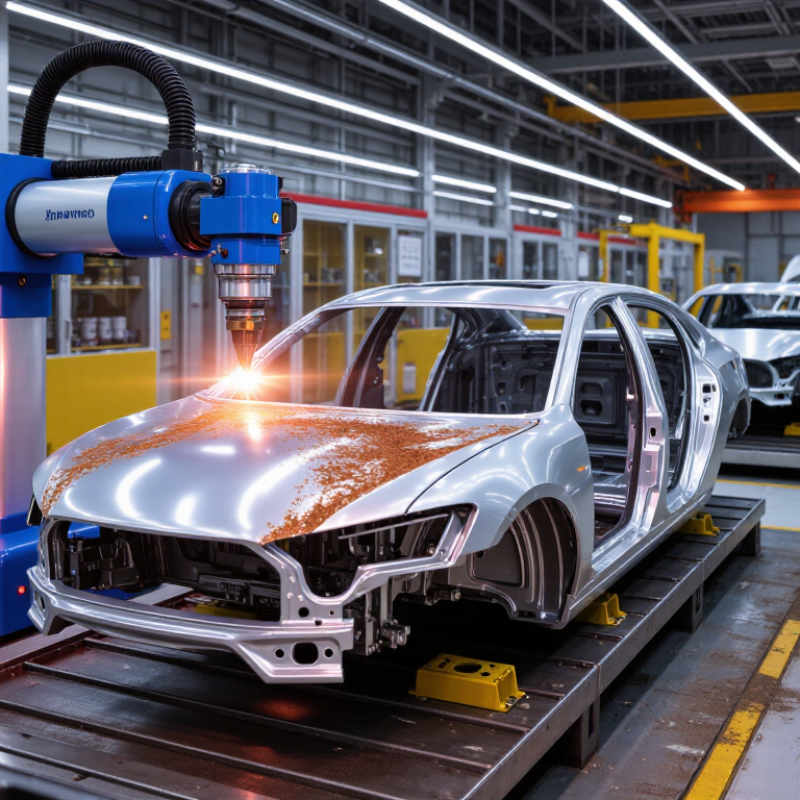
7 Best Laser Cleaning Equipment for Global Buyers?

What Is Laser Cleaning Equipment and How Does It Work?

Laser cleaning equipment uses a focused laser beam to remove rust, paint, oil, oxide, and other surface contaminants. The beam delivers controlled energy to the unwanted layer. That layer absorbs the light, heats rapidly, and breaks away through laser ablation. The base material reflects more of the beam, so damage can remain limited when settings are correct. No chemical bath is needed. The surface stays cooler.

Operators adjust power, pulse width, scanning speed, frequency, and focal distance. These controls determine how much energy reaches each spot. A pulsed laser suits delicate parts and thin coatings. A continuous-wave system handles larger metal areas and heavier contamination. Handheld units support maintenance work, while robotic systems offer repeatable production cleaning. Enclosed systems improve dust control and operator protection. Portable air-cooled units suit field repairs. Integrated line systems support factories. Precision 3D scanners help clean complex shapes.

In practical trials, surface testing matters more than impressive power ratings. A wrong setting can discolor metal, change texture, or leave hidden residue. That risk is easy to underestimate. Buyers should request sample cleaning, measurement records, training, ventilation details, and service response times. Operators also need suitable protective controls for the laser class. Results can vary with alloy, coating thickness, moisture, and beam angle. No machine performs perfectly on every material. A careful trial often reveals limitations that brochures overlook.

7 Best Laser Cleaning Equipment Types for Global Buyers

Comparison of representative commercial laser source power ranges. Pulsed systems are typically selected for delicate or precision cleaning, while continuous-wave systems are used for high-throughput removal of rust, paint, oxide, and coatings.

The ranges are brand-neutral industry values and may vary according to the material, contamination thickness, scan head, and required cleaning speed. Higher power generally supports faster coverage, while shorter pulses provide better control on sensitive surfaces.

How to Evaluate the Seven Best Laser Cleaning Machines

Choosing among the seven best laser cleaning machines requires more than comparing power ratings. I examine cleaning results on steel, aluminum, stone, and painted surfaces. A practical test uses the same 100-millimeter rusted area on every machine. I record cleaning speed, surface temperature, noise, and residue. Small differences matter.

Pulse stability deserves close attention. A machine may advertise high power, yet produce uneven results at lower settings. I test several frequencies and scanning speeds. The beam should remove contamination without creating visible grooves or discoloration. Operator controls must feel clear, even when wearing protective gloves. They should not require constant menu changes.

I also inspect the laser source, cooling system, extraction connection, cable quality, and emergency stop. Documentation should explain maintenance intervals and safe operating distances. Ask for measured data, not attractive claims. Local electrical and workplace requirements must be checked before purchase. Service response is equally important, especially when a scanner or cooling unit fails. I once judged a machine too quickly because its first test looked impressive. Later, its fine adjustment felt limited. That mistake changed my evaluation process. A repeatable test, trained operators, and honest operating costs reveal more than a showroom demonstration.

7 Best Laser Cleaning Equipment for Global Buyers? - How to Evaluate the Seven Best Laser Cleaning Machines

Rank Equipment Configuration Laser Type & Power Typical Wavelength Working Width Best Cleaning Applications Mobility Key Evaluation Advantage Buyer Consideration
1 Portable Pulsed-Fiber Cleaner Pulsed fiber laser
20–100 W
1,064–1,070 nm 50–110 mm Rust, paint, oxide layers, mold residue, and delicate metal surfaces Handheld; typically 15–35 kg system weight Low heat input and precise material removal Lower productivity on large areas; requires strict laser-safety controls
2 Medium-Power Pulsed Cleaner Pulsed fiber laser
100–300 W
1,064–1,070 nm 70–150 mm Heavy oxidation, coatings, weld discoloration, and industrial tooling Portable cart or compact cabinet Good balance between precision, cleaning speed, and versatility Higher purchase cost and greater power demand than entry-level units
3 High-Power Pulsed Cleaner Pulsed fiber laser
300–500 W
1,064–1,070 nm 100–180 mm Thick rust, marine components, molds, and production-line maintenance Industrial trolley or fixed workstation Higher throughput while retaining pulsed cleaning control Needs stronger extraction, cooling, and operator protection measures
4 Continuous-Wave Surface Cleaner Continuous-wave fiber laser
1–3 kW
1,070 nm 30–100 mm Large steel structures, mill scale, thick coatings, and heavy corrosion Floor-standing or wheeled industrial system Fast removal of substantial contamination from robust substrates Greater thermal load; may affect thin or heat-sensitive materials
5 Air-Cooled Compact Cleaner Pulsed fiber laser
50–200 W
1,064–1,070 nm 50–120 mm Workshop maintenance, machinery parts, weld preparation, and spot cleaning Compact cart; air-cooled design Simpler installation with reduced cooling-system maintenance Duty cycle may be lower than water-cooled industrial systems
6 Water-Cooled Production Cleaner Pulsed or continuous-wave fiber laser
200–1,000 W
1,064–1,070 nm 80–200 mm Continuous factory operation, molds, automotive parts, and fabrication lines Fixed or wheeled production unit Stable long-duration operation and improved thermal management Requires chiller maintenance, suitable space, and reliable power supply
7 Integrated Robotic Laser Cleaning Cell Pulsed or continuous-wave fiber laser
200–1,500 W
1,064–1,070 nm 80–250 mm; programmable path Repeatable cleaning of high-volume parts, weld seams, molds, and complex components Fixed enclosed cell with robot or automated axis Best repeatability, process consistency, and labor efficiency Highest integration cost; needs programming, guarding, and process validation

Note: Power, scan width, cooling method, and system weight vary by equipment configuration. Actual cleaning speed depends on contamination thickness, substrate material, laser settings, scan pattern, and operator or automation method.

Key Specifications: Power, Wavelength, Pulse Mode, and Scan Width

7 Best Laser Cleaning Equipment for Global Buyers?

Key Specifications: Power, Wavelength, Pulse Mode, and Scan Width

Choosing laser cleaning equipment starts with the surface, not the catalog price. Power affects working speed, but higher output can also increase heat input and surface risk. For paint, rust, and oxide layers, a practical range may differ greatly by material thickness. Power is not everything. Test a small area first, then inspect color, texture, and surface temperature.

Wavelength controls how strongly the laser interacts with contaminants and the base material. Metal surfaces often respond well to infrared systems, while reflective materials require careful energy management. Pulse mode matters just as much. Nanosecond pulses can remove coatings with limited heat transfer, while continuous output may suit broader, less delicate tasks. The wrong mode can leave discoloration or unwanted roughness. That mistake is expensive.

Scan width determines coverage per pass. A wider scan can improve productivity, but energy spreads across a larger area. Cleaning may become uneven near edges or deep grooves. Adjustable scan patterns help operators control overlap and reach corners. In practical trials, a narrower width often produces better results on detailed parts. It sounds slower. Sometimes it is faster overall.

Global buyers should request measured power, pulse duration, repetition rate, wavelength, scan range, cooling method, and electrical requirements. Ask for sample test records, maintenance intervals, and operator training details. Dust extraction and protective controls also deserve attention. Specifications can look impressive on paper, yet real performance depends on calibration, material condition, and operator judgment. My own evaluation would remain cautious without a hands-on test.

The Best Laser Cleaners for Different Materials and Applications

Laser cleaning equipment should match the material, contamination, and working distance.

For rusted carbon steel, a pulsed fiber laser can remove oxidation while limiting heat spread. Operators often see a clean gray surface after a few passes. Thin stainless steel needs lower energy and careful scanning. Otherwise, discoloration may appear around the cleaned area. For aluminum, a wider scan pattern can reduce uneven brightness. This choice matters on visible components.

Paint removal from steel frames usually requires controlled pulses and effective extraction. A compact handheld system suits repair benches and irregular welds. A higher-power continuous system fits larger surfaces and steady production lines.

Automated systems offer consistent movement across broad panels. They can work quickly, but edges may heat faster. Test coupons are essential. We record pulse energy, scan speed, focal distance, and surface temperature. This improves repeatability, though results are not always perfect.

For molds, laser cleaning can lift residue from grooves without abrasive contact.

It helps preserve fine textures when settings remain conservative. Stone and masonry require extra caution because historic surfaces can be fragile. Start with the lowest effective power. Inspect under angled light. In my trials, one pass rarely solved every corner, especially near deep pits. Dust extraction, enclosure controls, eye protection, and trained operation should guide the purchase. Local workplace rules still apply.

Safety, Maintenance, Pricing, and Global Buying Considerations

Seven laser cleaning configurations deserve attention from global buyers: handheld pulsed systems, continuous-wave units, backpack models, enclosed workstations, robotic cells, gantry machines, and integrated production lines. Pulsed equipment suits rust, paint, and delicate surfaces because it limits heat transfer. Continuous-wave systems can remove heavy coatings faster, but they demand stricter thermal control. A 2024 Fortune Business Insights report estimates the global laser cleaning market at about USD 587 million in 2023, with continued growth through 2032. Market growth does not remove buying risks.

Safety must guide the quotation. Buyers should verify compliance with IEC 60825-1, appropriate laser classification, interlocked enclosures, extraction systems, and supplied protective eyewear. Operators need documented training, not only a warning label. Maintenance usually includes lens inspection, filter replacement, beam-path checks, and cooling-system monitoring. Dust is not harmless. OSHA guidance also stresses controlling airborne contaminants through ventilation and exposure assessment. In practice, neglected filters can reduce cleaning quality and increase downtime.

Pricing varies widely. Entry-level handheld systems may cost roughly USD 10,000–30,000, while automated cells can exceed USD 100,000, excluding installation and integration. These figures are indicative, not promises. A cheaper quote can hide weak support, unavailable spare parts, or unsuitable voltage requirements. Global buyers should request test samples, total-cost estimates, local service coverage, customs documentation, and warranty terms. I would not choose the highest power automatically. Sometimes, a slower pulsed system produces better results with less surface damage. That choice needs evidence.