
What Is the Best CNC Plasma Table from China?
Choosing the best Cnc Plasma Table from China is not simply a price comparison. The right machine must match material thickness, cutting area, production volume, and operator skill. A small fabrication shop may need a 1,500 × 3,000 millimeter bed. A steel service center may require a larger format. Real evaluation begins with cutting samples, not attractive catalog photographs. Ask suppliers to cut your steel and share close images of corners, holes, and slag. Watch the torch height controller closely. It influences edge quality and consumable life. Also examine the gantry, guide rails, drive motors, control software, and fume management. These details often decide whether production feels smooth or frustrating.
Reliable Chinese manufacturers should provide clear specifications, factory videos, test reports, manuals, and responsive technical support. Independent certifications can help, but documents deserve verification. A logo alone proves little. Check electrical standards, warranty terms, spare-parts availability, installation support, and delivery responsibilities before ordering. Talk with existing customers when possible. Their maintenance history may reveal more than polished sales language. This guide compares machine structure, plasma sources, software compatibility, accuracy, service, and total ownership cost. It also considers practical weaknesses, including noisy operation, learning curves, and occasional alignment problems. No table is perfect. An affordable model may cut well but offer limited support. A premium system may be powerful yet unnecessarily complex for a small workshop. The final choice should be evidence-based, realistic, and connected to your daily workload. That is less exciting than naming one universal winner, but it is more useful.
What Defines a High-Quality CNC Plasma Table from China?
What Is the Best CNC Plasma Table from China?
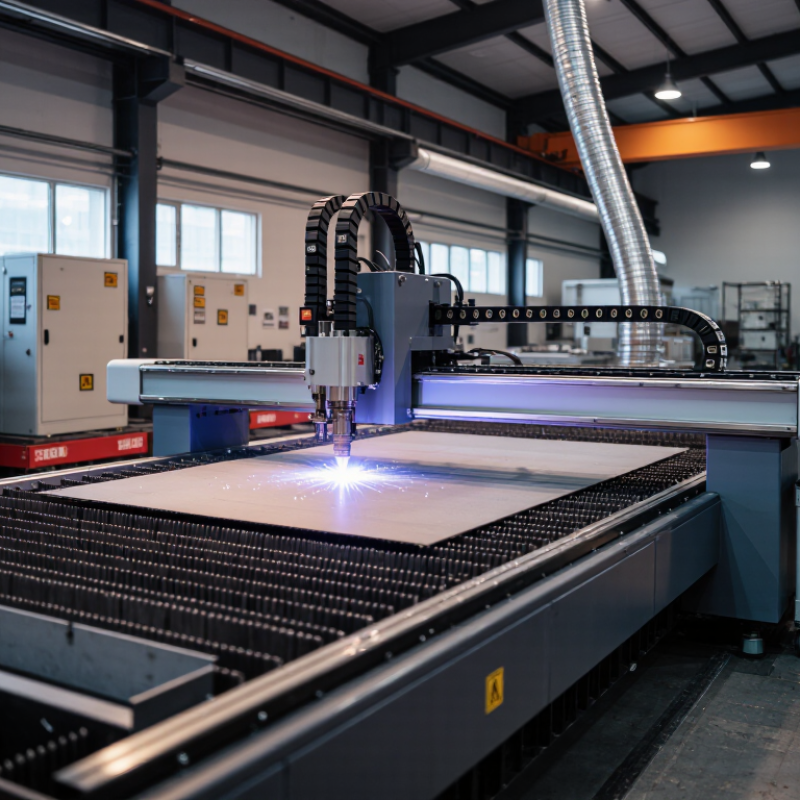
A high-quality CNC plasma table begins with mechanical stability, not advertising. The frame should use thick, stress-relieved steel with accurately machined mounting surfaces. During cutting, vibration can leave visible ripples on a 10-millimeter steel plate. That defect often appears after several hours, not during a showroom demonstration.
Cutting accuracy depends on several connected systems. Reliable linear guides, protected drive components, and automatic torch height control help maintain a consistent gap. ISO 9013 evaluates thermal-cut edges through perpendicularity tolerance, roughness, and visible quality grades. A serious supplier should provide measured test results, not vague claims. The report should identify material thickness, cutting speed, gas pressure, and consumable condition.
Control software also matters. Deloitte’s 2024 Smart Manufacturing Survey found that 92% of manufacturers view smart manufacturing as important for competitiveness. A practical table should support stable file transfer, torch-height sensing, fault alarms, and simple operator adjustments. Documentation should include wiring diagrams, maintenance intervals, and spare-part specifications.
The World Steel Association reported global crude steel production of about 1.89 billion tonnes in 2023. That scale makes repeatable cutting increasingly valuable for fabricators. Still, a larger table is not automatically better. No table is perfect. Some suppliers publish impressive speeds while hiding edge-quality compromises. Buyers should inspect sample cuts, verify calibration records, test emergency stops, and speak with actual users. A careful factory audit may reveal more than a polished quotation.
What Is the Best CNC Plasma Table from China? – What Defines a High-Quality CNC Plasma Table from China?
| Evaluation Dimension | Entry-Level Configuration | Professional Workshop Configuration | Industrial Configuration | What Defines High Quality | Recommended Target |
|---|---|---|---|---|---|
| Usable Cutting Area | 1,300 × 2,500 mm | 1,500 × 3,000 mm | 2,000 × 4,000 mm or larger | Matches the customer’s sheet size while maintaining adequate clearance around the cutting path. | Choose the smallest table that fully supports the intended sheet size. |
| Plasma Power Range | 45–65 A | 85–125 A | 130–260 A | The power source is correctly matched to material thickness, duty cycle, consumables, and available electrical service. | 85–125 A for general fabrication and moderate production. |
| Recommended Mild-Steel Cutting Thickness | 0.8–12 mm | 1–25 mm | 3–40 mm, depending on the power source | Published cut ratings distinguish between recommended, maximum, and severance thickness instead of presenting one inflated figure. | Select based on the normal production thickness, not the occasional maximum. |
| Typical Piercing Capability | Up to approximately 8–10 mm | Up to approximately 16–20 mm | Up to approximately 25–32 mm | Piercing performance is verified under stated material, amperage, gas, and consumable conditions. | Allow a safety margin above the thickest frequently pierced material. |
| Positioning Accuracy | ±0.20–0.30 mm | ±0.10–0.20 mm | ±0.05–0.10 mm | Accuracy is supported by rigid construction, calibrated motion components, and a documented test method. | ±0.10–0.20 mm is suitable for most fabrication work. |
| Drive and Motion System | Rack-and-pinion drive with stepper motors | Precision rack-and-pinion drive with closed-loop or upgraded servo options | Servo-driven rack-and-pinion system with industrial motion control | Low backlash, protected rails, proper lubrication points, and stable acceleration without visible vibration. | Use servo motion for frequent production and larger tables. |
| Torch Height Control | Automatic voltage-based THC | Automatic THC with anti-dive and height sensing | Advanced THC with rapid height correction, collision protection, and arc-voltage feedback | Maintains a consistent torch-to-plate distance and reduces damage during warped-sheet cutting. | Automatic THC with anti-dive protection is a practical minimum. |
| Cutting Speed Range | Up to approximately 6,000 mm/min | Up to approximately 8,000–12,000 mm/min | Up to approximately 12,000–20,000 mm/min | Rated speed is supported by acceleration performance, cut charts, material thickness, and actual cut quality. | Prioritize stable cutting speed over the highest unloaded travel speed. |
| Table Structure | Welded steel frame with water or downdraft bed | Stress-relieved welded frame with replaceable slats | Heavy-duty stress-relieved frame with reinforced supports and replaceable bed components | The frame remains square and stable under heat, vibration, sheet loading, and repeated production cycles. | A replaceable slat system lowers long-term maintenance cost. |
| Fume and Dust Control | Water table or basic downdraft extraction | Sectional downdraft or water table with effective fume capture | Engineered sectional extraction with filtration sized for the cutting load | Fume control is designed around airflow, ducting, filter capacity, and local workplace requirements. | Use a properly sized water or downdraft system for routine indoor operation. |
| Control System and File Compatibility | Common 2D CAD/CAM formats and standard G-code workflows | Integrated nesting, lead-in, kerf, and cut-parameter functions | Production nesting, job management, diagnostics, and network-ready data transfer | The controller supports reliable file transfer, parameter editing, torch control, and operator error recovery. | Choose software that operators can learn quickly and update locally. |
| Consumable Management | Manual replacement and basic cut charts | Documented consumable part numbers, cut charts, and wear inspection guidance | Process monitoring, consumable-life tracking, and documented maintenance procedures | Correct consumable selection and air quality are treated as part of the cutting system, not as optional accessories. | Require clear cut charts and locally available replacement consumables. |
| Compressed-Air Requirements | Clean, dry air with approximately 6–8 bar supply pressure | Stable, filtered, dry air sized for the plasma power source | Engineered air, oxygen, or nitrogen supply with filtration and pressure monitoring | Moisture and oil control protect consumables, improve arc stability, and reduce inconsistent cut quality. | Specify filtration, dryer performance, flow rate, and pressure requirements before purchase. |
| Electrical and Safety Features | Emergency stop, limit switches, grounding, and protective covers | All entry-level features plus interlocks and documented electrical protection | Full guarding, interlocks, overload protection, verified grounding, and machine risk documentation | Safety systems are physically installed, tested, labeled, and supported by operating instructions. | Do not purchase without emergency stops, limits, grounding, and clear safety documentation. |
| Factory Quality Verification | Basic functional test | Dimensional inspection, dry-run test, sample cutting, and electrical checks | Documented factory acceptance test with accuracy, speed, arc, safety, and sample-cut records | Inspection results are traceable and include machine serial information, test conditions, and corrective actions. | Request a video or report showing a sample cut on material similar to your own. |
| Installation and Technical Support | Manuals and remote guidance | Remote commissioning, operator training, and troubleshooting support | Formal commissioning, training, spare-parts planning, and service-level response procedures | Support includes wiring diagrams, parameter backups, maintenance schedules, and a clear escalation process. | Confirm response time, language support, training scope, and spare-parts availability in writing. |
| Overall Quality Score | Suitable for light and occasional work | Best balance for most professional workshops | Best for high utilization and demanding production | High quality is defined by repeatable cutting, stable motion, reliable height control, safety compliance, documented testing, and long-term support. | For most buyers, the professional workshop configuration offers the strongest value-to-capability balance. |
Related Posts
-
What Are the Top 10 Types of CNC Plasma Tables?
-

Navigating 2025's Cutting-Edge CNC Innovations: Proven Strategies to Optimize Your Best CNC Cutter Investments
-

What is a Plasma CNC Machine and How Does It Work?
-

Mastering the Art of Plasma Cutting with the Best Plasma Cutter Guide
-
Top China Best CNC Plasma Table for Global Buyers?
-
Unveiling the Best Plasma CNC Machine Specifications and How to Choose the Right One