
What Is an Air Breaker and How Does It Work?
An Air Breaker is a low-voltage circuit breaker that uses atmospheric air to extinguish an electrical arc. It protects power systems when overloads, short circuits, or abnormal current conditions occur. Unlike a fuse, it can usually be reset after the fault is cleared. That difference matters in factories, commercial buildings, and large distribution panels.
John Cadick, an electrical safety engineer and author, has described the principle clearly: “A circuit breaker is not a fuse; it is a controlled interruption device.” This idea helps explain how an Air Breaker operates. When its trip unit detects excessive current, the mechanism separates the contacts quickly. An arc forms between them. Air chutes then stretch, cool, and divide the arc until the current stops safely. The process is fast, but never careless.
A technician may hear a sharp click and see the indicator change from “ON” to “TRIPPED.” That small movement can protect cables, switchboards, and connected equipment from severe thermal damage. Regular inspection remains important. Dust, loose connections, worn contacts, and weak springs can reduce performance. An Air Breaker may look simple from outside. It is not.
A clear explanation should also admit its limits. Trip settings, breaking capacity, maintenance intervals, and installation conditions vary by model. Guessing can create dangerous errors. Reliable work requires the manufacturer’s manual, correct testing equipment, and qualified electrical professionals. This guide explores the internal parts, operating sequence, safety considerations, and practical selection factors behind an Air Breaker.
Definition and Basic Purpose of an Air Breaker
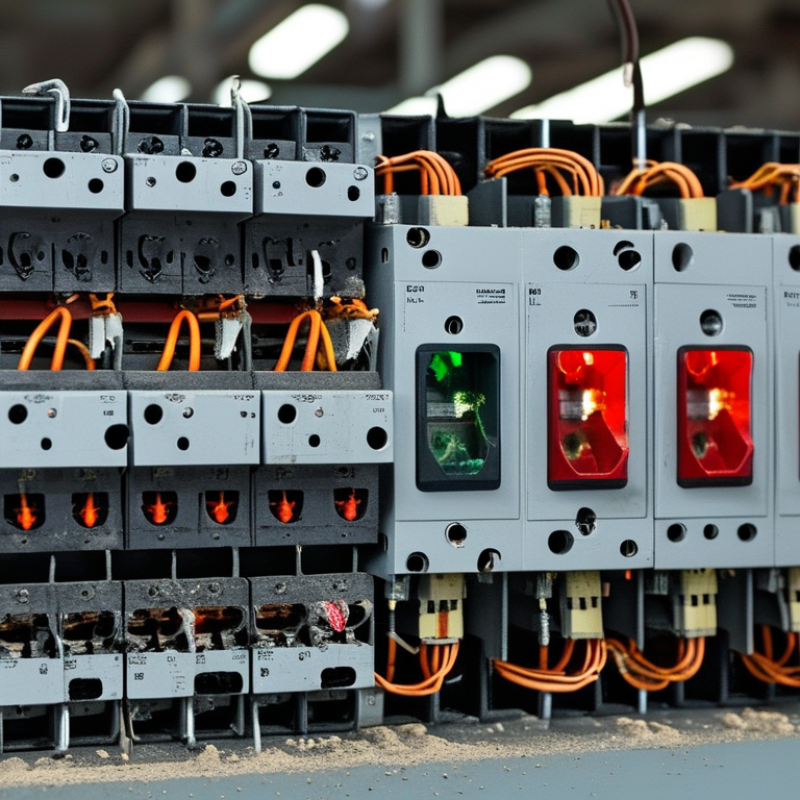
An air breaker, more precisely an air circuit breaker, is a low-voltage switching and protection device. It uses ordinary air to extinguish the electrical arc created when contacts separate. Its basic purpose is to disconnect power during overloads, short circuits, or planned maintenance. This protects conductors, distribution equipment, and nearby personnel from dangerous fault energy.
Inside the breaker, fixed and moving contacts carry current during normal operation. When a trip unit detects abnormal current, a release mechanism opens those contacts rapidly. Arc chutes divide, cool, and lengthen the arc until it stops conducting.
Many industrial units cover rated currents from about 630 to 6,300 amperes, while interrupting capacity can reach tens of kiloamperes. IEC 60947-2 defines key performance and testing requirements for these devices. Ratings still depend on voltage, enclosure conditions, and the installation’s available fault current.
The IEA’s Electricity 2024 report expects global electricity demand to grow by 3.2% annually from 2024 through 2026. Larger and more complex distribution systems therefore need dependable interruption. In field commissioning, technicians verify trip settings, insulation, contact wear, and mechanical operation. A breaker can appear healthy and still fail a critical test. That detail is easy to underestimate. An air breaker is not simply a large switch; coordination with upstream and downstream protection determines whether one fault causes a local trip or a wider outage.
Main Components and Their Functions
An air breaker, commonly called an air circuit breaker, interrupts current through atmospheric air. It protects low-voltage distribution systems from overloads and short circuits. The International Energy Agency’s Electricity 2024 report projects global electricity demand to grow by an average of 3.4% annually through 2026. That pressure makes dependable switching equipment increasingly important.
The main current path uses fixed and moving contacts. The moving contact separates during a fault, creating an electrical arc. An arc chute divides and cools that arc with metal plates. The trip unit detects abnormal current through thermal, magnetic, or electronic sensing. Electronic units can offer adjustable long-time, short-time, instantaneous, and ground-fault protection. The operating mechanism stores energy, then opens the contacts quickly. It must be fast.
Terminals carry current into and out of the breaker. Insulated barriers reduce accidental contact and phase-to-phase flashover. Some designs include position indicators, auxiliary contacts, and motorized charging systems. IEC 60947-2 provides the key performance framework for low-voltage circuit breakers, including testing and interruption requirements. In field inspections, dust near the arc chute and loose terminals are easy to overlook. That is a practical weakness. A breaker may appear healthy while heat damage is developing inside. Maintenance records, contact inspection, and trip testing therefore matter as much as the nameplate rating.
How an Air Breaker Interrupts Electrical Current
What Is an Air Breaker and How Does It Work?
An air breaker interrupts electrical current by separating contacts in open air. Under normal conditions, these contacts carry current through a low-resistance path. When an overload or short circuit occurs, a trip mechanism releases the moving contact. The circuit opens, but current does not stop instantly. An electric arc forms between the separating contacts.
The arc is extremely hot and can damage nearby insulation. Inside the breaker, arc runners guide it toward an arc chute. Splitter plates divide the arc into smaller sections. The plates lengthen, cool, and deionize the arc until it cannot sustain current. Air provides the insulating medium. Some designs also use magnetic forces to push the arc into the chute more quickly.
The interruption happens fast. Very fast. In practical maintenance work, correct contact alignment matters greatly. Uneven wear can increase arcing time and heat. Protective releases may sense thermal overloads, magnetic faults, or electronic current patterns. Their settings must match the circuit and connected equipment. A breaker that trips repeatedly should not be reset without investigation. That habit can hide a loose connection, damaged cable, or incorrect load.
The term “air breaker” can be slightly misleading. It does not mean ordinary air removes every fault safely. Interrupting capacity, voltage, humidity, and maintenance condition all affect performance. Inspection should include contact erosion, arc-chute cleanliness, terminal tightness, and trip operation. No breaker is infallible.
What Is an Air Breaker and How Does It Work? - How an Air Breaker Interrupts Electrical Current
| Data Dimension | Typical Information | How It Relates to Current Interruption |
|---|---|---|
| Definition | An air breaker, commonly called an air circuit breaker (ACB), is a resettable switching and protection device that opens an electrical circuit in air when abnormal current is detected. | Opening the contacts creates a gap that separates the source from the load and stops the fault current after the arc is extinguished. |
| Arc-interruption medium | Atmospheric air at normal pressure; no oil or insulating gas is required for the primary interruption process. | The air gap and arc-control structure cool, lengthen, split, and de-ionize the arc until it can no longer conduct current. |
| Common voltage range | Typically used in low-voltage systems up to approximately 1,000 V AC, with the exact rating determined by the equipment design and applicable standard. | The rated voltage determines the contact spacing, insulation requirements, and ability to withstand recovery voltage after interruption. |
| Typical continuous current | Common frame ratings range from several hundred amperes to several thousand amperes; many industrial units are rated around 800–6,300 A. | The continuous-current rating indicates the current the breaker can carry without exceeding its thermal limits when properly installed. |
| Short-circuit interrupting capacity | Depending on the voltage, frame size, and construction, typical low-voltage ACB interrupting ratings are approximately 25–100 kA. | This is the maximum prospective fault current the breaker can safely interrupt under specified test conditions. |
| Normal current path | Current flows through the line terminal, fixed contact, moving contact, flexible connection, and load terminal. | When the contacts are closed, the low-resistance path carries the load current with minimal voltage drop. |
| Fault detection | An electronic or thermal-magnetic trip unit monitors overload, short-circuit, and sometimes ground-fault conditions. | Once the measured current exceeds the selected protection curve, the trip mechanism releases the stored operating energy. |
| Contact separation | A spring-operated or motor-charged mechanism rapidly moves the contacts apart. | The first instant of separation does not immediately eliminate current; an electrical arc forms between the contacts. |
| Arc formation | The arc is a hot, ionized path through the air that temporarily maintains current flow across the opening contacts. | Arc control is essential because contact separation alone cannot safely interrupt a high fault current. |
| Arc chute function | Insulated splitter plates divide the arc into smaller sections and guide it upward into the arc chute. | Splitting and lengthening the arc increases its voltage requirement and accelerates cooling and de-ionization. |
| Current zero | In an AC circuit, the current naturally reaches zero twice during each cycle, or 100 times per second at 50 Hz and 120 times per second at 60 Hz. | The breaker uses the current-zero interval to extinguish the arc and prevent it from restriking. |
| Arc extinction | The arc is extinguished when the air path has cooled and de-ionized enough to withstand the recovery voltage. | Successful interruption requires the dielectric strength between contacts to rise faster than the voltage attempting to re-establish the arc. |
| Protection functions | Common functions include long-time overload, short-time delay, instantaneous short-circuit, and optional ground-fault protection. | Time-current settings coordinate the breaker with downstream protective devices and limit equipment damage. |
| Typical applications | Main switchboards, generator outputs, large motor feeders, industrial distribution panels, and incoming utility feeders. | These circuits often require high continuous-current capacity, adjustable protection, and frequent or remote operation. |
| Reset and reuse | After the fault is cleared and the breaker is inspected or reset according to its instructions, the contacts can be closed again. | Unlike a fuse, an air breaker is designed for repeated operation, although severe faults may require testing or replacement of internal parts. |
Operating Sequence During a Fault
When an air breaker detects a fault, its operating sequence begins within milliseconds. The current rises above the protection setting. A trip unit senses this abnormal condition through thermal, magnetic, or electronic elements. It then sends a release command to the stored-energy mechanism.
The latch disengages. Quickly. The main contacts separate, creating an electric arc between them. This arc does not disappear immediately. It moves into an arc chamber, where metal plates divide it into smaller sections. The plates cool and lengthen the arc, while the surrounding air removes heat and reduces conductivity. At the next current zero, the arc is extinguished if the contact gap has gained sufficient dielectric strength.
The breaker mechanism continues opening until the contacts reach their designed position. Auxiliary contacts may signal the trip condition to a control panel. A visible indicator can also show that the breaker is open, though indicators should never replace electrical testing. In practical maintenance, technicians inspect the chamber, contact surfaces, and trip records before resetting the breaker. Reclosing too quickly is a common mistake. The original fault may still be present, and repeated closing can worsen contact damage. Protection settings also deserve review, because a breaker can operate correctly while the wider system remains poorly coordinated. Timing is not always perfect. Dust, wear, or a weak spring can change the sequence.
Common Applications, Benefits, and Limitations
An air breaker, commonly called an air circuit breaker, interrupts electrical current through air. When a fault occurs, its contacts separate and create an arc. Arc chutes divide, cool, and extinguish that arc before current reaches dangerous levels. Modern units often use electronic trip systems to detect overloads, short circuits, and ground faults. Settings must match the installation, not guesswork.
Air breakers are widely used in commercial buildings, factories, data centers, and utility rooms. They often protect main distribution boards, large motors, transformers, and generator connections. Their reusable design supports repeated switching and fault clearing without replacing a fuse after every event. Maintenance teams can usually inspect contact wear, connection tightness, and trip performance. That practical access is valuable during planned shutdowns.
However, air breakers are not small devices. They require considerable cabinet space and careful coordination with downstream protection. Their purchase and installation costs may exceed simpler protective devices. Dust, humidity, loose terminals, and neglected maintenance can reduce reliability. They may also produce strong arc energy during interruption, so trained personnel and suitable protective procedures remain essential. In practice, selecting an air breaker is not always neat; a higher rating does not automatically provide better protection. I have seen specifications focus on current capacity while overlooking short-circuit conditions, enclosure space, and future load growth. That mistake deserves a second review.