
2026 Top Manhole Types What Global Buyers Need to Know?
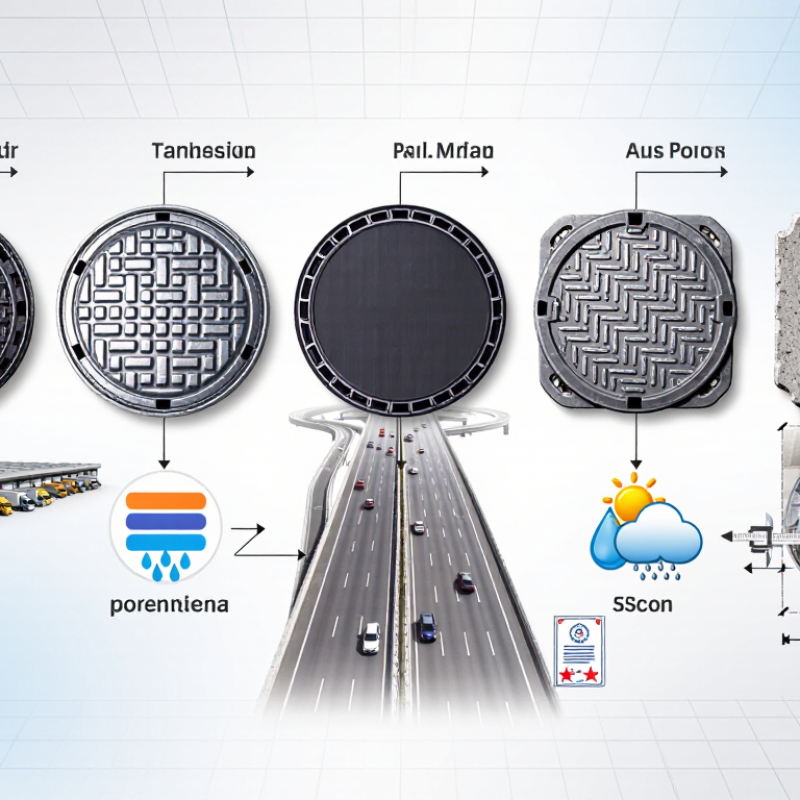
Choosing the right Manhole in 2026 requires more than comparing prices or catalog photographs. Global buyers must assess traffic loads, installation depth, climate exposure, drainage conditions, and local access requirements. A cover beside a quiet warehouse may need different performance from one installed on a busy highway.
Common options include cast iron, ductile iron, steel, polymer composite, and reinforced concrete designs. Each material brings practical advantages and limitations. Ductile iron handles heavy traffic well, while composite covers can reduce weight and corrosion concerns. Concrete systems may suit large chambers, but lifting and sealing can become difficult. No single type wins everywhere.
Experienced buyers usually request load classifications, dimensional drawings, coating details, gasket specifications, and test records. They also verify whether the supplier follows recognized regional or international standards. Certificates should be traceable, not merely printed in a brochure. This small detail matters during inspections and future maintenance.
Site experience still changes the decision. A coastal project may demand stronger corrosion protection. A cold region may expose weaknesses in brittle materials and poorly fitted seals. Urban projects often need quiet, slip-resistant covers. That assumption can fail. A technically strong Manhole may still create delays if its frame does not match existing pavement levels.
Reliable sourcing includes sample checks, factory communication, packaging reviews, and independent quality inspection when practical. Buyers should confirm tolerances before production begins. They should also clarify replacement availability and warranty terms. The best selection balances safety, service life, installation effort, and total ownership cost. Some specifications remain uncertain until the site is measured carefully. That is where careful judgment matters.
What Is a Manhole and Why Do Its Types Matter in 2026?
What Is a Manhole and Why Do Its Types Matter in 2026?
A manhole is an access chamber for inspecting, cleaning, and repairing buried drainage or utility networks. It usually includes a cover, frame, chamber, benching, and access steps. Its type matters because soil pressure, groundwater, traffic, and maintenance needs vary by location. A pedestrian path needs different protection from a busy freight road.
The WHO/UNICEF Joint Monitoring Programme reported that 3.5 billion people lacked safely managed sanitation in 2022. The U.S. EPA’s 2022 Clean Watersheds Needs Survey estimated $630.1 billion in wastewater infrastructure needs. These figures show why reliable access points matter. Poorly selected covers can rock under traffic, admit stormwater, or become difficult to remove. Circular, rectangular, shallow, deep, watertight, and traffic-rated designs each solve different problems. However, classifications are not always applied consistently across regions. That remains a practical weakness.
Tips: Check the expected load class before ordering. Confirm chamber depth and opening size. Inspect frame seating, anti-slip surfaces, corrosion resistance, and sealing details. Ask for test evidence based on the relevant local standard, such as EN 124 or an equivalent specification. A cheaper cover may still create higher maintenance costs. Field conditions often disagree with drawings, so site verification should not be skipped.
2026 Top Manhole Types: What Global Buyers Need to Know? — What Is a Manhole and Why Do Its Types Matter in 2026?
A manhole is an access chamber that allows inspection, maintenance, cleaning, ventilation, and connection of underground utility networks. The correct type depends on service function, structural loading, hydraulic conditions, installation depth, corrosion exposure, and applicable local standards.
| Manhole Type | Primary Network or Use | Common Construction Materials | Typical Clear Opening Range | Typical Structural Load Requirement | Main Advantages | Key Limitations and Buyer Checks | Relevant Standards or Design References |
|---|---|---|---|---|---|---|---|
| Sanitary Sewer Manhole | Gravity wastewater collection systems; pipe junctions, changes in direction, changes in grade, and maintenance access. | Reinforced concrete, precast concrete, polymer concrete, or corrosion-resistant thermoplastic components. | Approximately 600–1,200 mm for access covers; chamber diameter commonly about 1,000–1,800 mm, subject to local design. | Pedestrian to traffic areas Cover and frame should be selected according to the actual site load class. | Provides reliable access for rodding, jetting, inspection, and flow maintenance. | Wastewater gases and biogenic sulfuric acid can attack cementitious materials. Check corrosion protection, watertightness, benching, gasket compatibility, and invert geometry. | EN 752; EN 124-1 and EN 124-2; ASTM C478 where applicable; local sewer authority specifications. |
| Stormwater Manhole | Road drainage, surface-water collection, storm sewers, junctions, and maintenance access. | Reinforced concrete, precast concrete, polymer concrete, ductile iron covers and frames, or composite covers. | Approximately 600–1,200 mm for access covers; chamber dimensions vary with pipe diameter, flow, and maintenance requirements. | Often traffic-rated Roadway locations commonly require D400 under EN 124-2, subject to engineering approval. | Supports drainage inspection and allows access to sediment-prone networks. | Inlet hydraulics, debris accumulation, uplift, infiltration, and hydraulic surcharge must be considered. Verify slip resistance and drainage details in pedestrian zones. | EN 124-1 and EN 124-2; EN 752; local drainage and roadway standards. |
| Utility Manhole | Telecommunications, electrical, fiber-optic, district heating, and other underground utility corridors. | Reinforced concrete, polymer concrete, fiberglass-reinforced plastic, thermoplastic chambers, steel, or ductile iron access covers. | Approximately 600–1,200 mm for access covers; chamber size depends on cable bend radius, jointing space, and equipment clearance. | Pedestrian to heavy traffic Load classification must match the installation location and cover system. | Can be configured with cable supports, sumps, ladders, pulling points, and internal separation. | Check cable working radius, water ingress protection, grounding or bonding requirements, fire performance, ventilation, and electromagnetic or thermal considerations where relevant. | EN 124-1 and EN 124-2; IEC and national utility requirements; project-specific electrical and telecommunications standards. |
| Traffic-Rated Manhole | Road lanes, parking areas, loading zones, industrial yards, airports, and other vehicle-accessible surfaces. | Ductile iron, reinforced concrete, steel, composite materials, or combinations of structural chamber and heavy-duty cover. | Common access cover sizes range from about 600 to 1,200 mm; larger openings may require multi-part covers. | B125, C250, D400, E600, or F900 EN 124 load classes are selected according to the installation zone. | Designed to resist wheel loads, impact, vibration, and repeated traffic when correctly installed. | Load class alone does not guarantee performance. Verify frame bedding, concrete surround, cover seating, anti-rocking design, surface finish, and installation quality. | EN 124-1 and EN 124-2; EN 124-3 through EN 124-6 for relevant material categories; local road authority requirements. |
| Watertight Manhole | Areas with high groundwater, flood exposure, contaminated sites, pressurized or surcharge-prone networks, and environmentally sensitive installations. | Precast or cast-in-place reinforced concrete with sealed joints; polymer concrete; thermoplastic or fiberglass-reinforced components. | Approximately 600–1,200 mm access openings, with chamber dimensions determined by the network and access requirements. | Site-specific structural design Must resist external groundwater pressure, buoyancy, traffic loads, and internal surcharge where applicable. | Reduces infiltration into sewers and exfiltration into surrounding soil or groundwater. | Specify tested seals, joint systems, pipe penetrations, cover gaskets, hydrostatic resistance, and anti-flotation measures. Watertightness depends heavily on installation. | EN 1610; EN 1917; EN 206 where concrete design applies; project leakage-testing requirements. |
| Shallow Inspection Chamber | Low-depth drainage, irrigation, cable, landscape, and light utility installations where full-depth man-entry access is unnecessary. | Polypropylene, polyethylene, PVC, fiberglass-reinforced plastic, polymer concrete, or lightweight precast concrete. | Typically about 300–600 mm access openings, depending on the system and maintenance method. | Usually pedestrian or light-duty Higher load classes are possible only with a suitably engineered chamber and cover assembly. | Lower excavation volume, easier handling, faster installation, and suitability for confined layouts. | Not normally intended for routine personnel entry. Check cleaning access, deformation resistance, groundwater stability, cover load rating, and connection compatibility. | EN 13598-1 and EN 13598-2 for relevant plastic inspection chamber applications; EN 124 for access covers. |
| Large-Diameter Maintenance Manhole | Deep or large-diameter sewer, stormwater, industrial drainage, trunk utility, and high-capacity infrastructure. | Reinforced concrete, precast concrete, polymer concrete, steel-fabricated systems, or engineered composite construction. | Access covers commonly 600–1,200 mm; internal chamber diameter may exceed 1,800 mm where personnel access and equipment clearance are required. | Frequently traffic-rated Structural design must account for depth, earth pressure, groundwater, traffic, and connected-pipe loads. | Provides working space for inspection, flow control, equipment installation, and complex pipe arrangements. | Higher transport, lifting, excavation, and installation costs. Confirm lifting points, ladder or step safety, ventilation, confined-space procedures, and internal fall protection. | EN 1917; EN 1610; EN 124-1 and EN 124-2; national confined-space and occupational-safety requirements. |
| Industrial or Corrosion-Resistant Manhole | Industrial wastewater, chemical drainage, food processing, wastewater treatment facilities, and sites exposed to aggressive chemicals. | Polymer concrete, fiberglass-reinforced plastic, high-performance concrete with protective lining, stainless steel components, or compatible thermoplastics. | Approximately 600–1,200 mm access openings; chamber size is determined by process flow and maintenance requirements. | Load and chemical exposure both critical Traffic rating and chemical resistance must be specified separately. | Can provide improved resistance to acids, salts, solvents, sulfides, and other aggressive environments when properly selected. | Material compatibility must be verified against actual concentration, temperature, exposure time, and cleaning chemicals. Check UV resistance, fire behavior, liner adhesion, and joint materials. | EN 206 for concrete exposure design; EN 1917 where applicable; ISO 175 and manufacturer test methods for chemical-resistance evaluation. |
Buyer note: Dimensions shown are typical planning ranges rather than universal specifications. Final selection should be based on hydraulic design, chamber depth, soil and groundwater conditions, traffic category, corrosion exposure, maintenance method, local regulations, and verified product test documentation. EN 124 load classes generally include A15, B125, C250, D400, E600, and F900, with the correct class determined by the actual installation area.